About Komodo National Park
Please contact us for our next Komodo trip details in 2022
Dragons
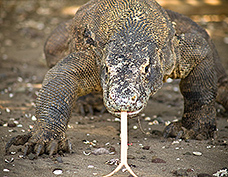
The largest lizard in the World, the Komodo Dragon is found no-where else in the world except five island's in the Indonesian Archipelago. Namely Komodo, Rinca, Flores, Gili Motang and Gili Dasami.
Only discovered by scientists in 1910, these lizards have been verified to grow to over 3 metres in length and weigh over 160kgs.
Using their forked tongue to sniff-out prey, they can detect a dead or dying animal up to 9kms away. Their mouths contain such virulent bacteria, that if their prey escapes the animals jaws, it will suffer from serious wound infections and usually die from these.
National Park
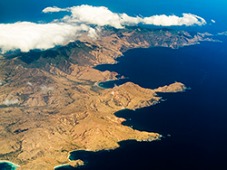
Located among the Lesser Sunda Islands between Flores and Sumbawa. Komodo Island is just one of a group of three large islands and many smaller islands that make-up the Komodo National Park.
Formed in 1980 to protect the habitat of the Komodo Dragons, UNESCO later listed the Komodo National Park as a World Heritage Site in 1991.
The Diving
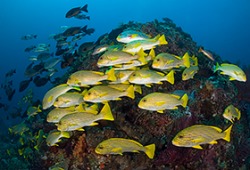
Dr Gerry Allen - one of the World's leading marine scientists, describes Komodo as "Perhaps the most extraordinary assemblage of tropical marine species yet discovered"
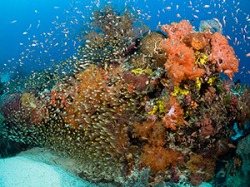
The waters of Komodo have two very distinct physical environments; The reefs in the northern area of the Park are renown for warm (27-30ºC) clear waters with many coral-rich reefs and wide variety of tropical fish. At some dive sites, the sheer number of fish has to be seen to be believed!
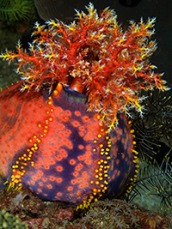
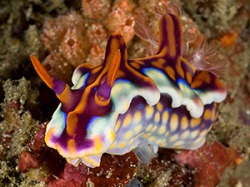
The southern section of the Park has much cooler waters (up to 12ºC cooler) caused by oceanic upwellings from the deep Java Trench just south of Indonesia. Here the seascape is stark underwater cliffs and boulders adorned with sea fans, soft corals, crinoids and sponges surrounded by schooling fish and some of the most bizarre critters you are ever likely to see.
- Click Here for details of the Live-Aboard Boat
- Click Here to read a General Itinerary for our Komodo Photo Trips
- Click Here to watch a short Video from Komodo
- Click Here to read some of our Guests Comments from past Komodo Photo Trips
- Click Here to Contact Us for more information on our Komodo Photo Trip in 2022
 |
 |
Go Back to Live-Aboard Trips Page